
How to Study in Italy: Step-by-Step Guide for International Students (2026)
Dreaming of studying amidst Italy's rich history, art, and culture? Our 2026 guide breaks down the step-by-step process for international students, from choosing a university to securing your visa.
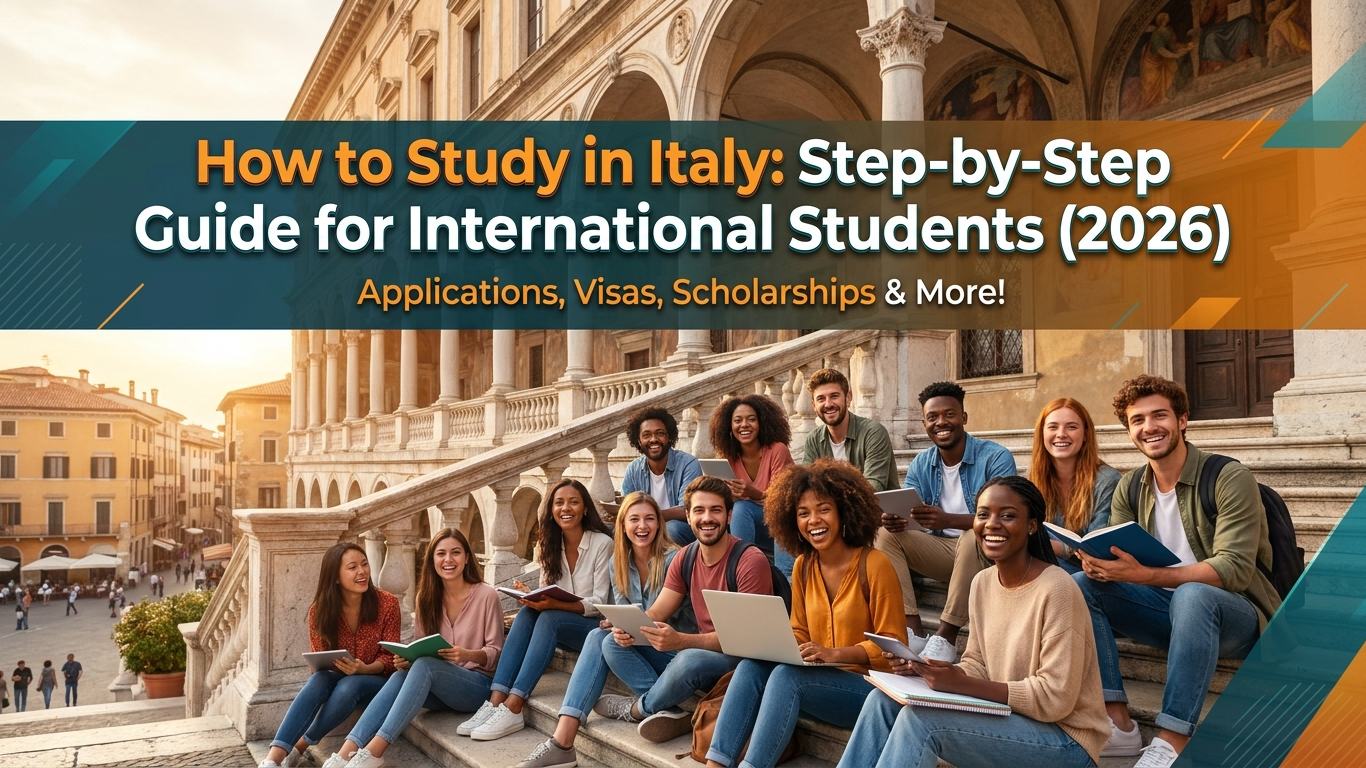
Italy has long been a beacon for scholars, artists, and thinkers. For international students, it offers a unique blend of world-class education, incredible history, and a vibrant lifestyle. From the ancient ruins of Rome to the fashion-forward streets of Milan, studying in Italy is more than just an academic pursuit—it's an immersive cultural experience. But how do you turn this dream into a reality? This guide will walk you through the essential steps.
Why Choose Italy for Your Studies?
Italy is home to some of the world's oldest and most prestigious universities. Institutions like the University of Bologna, Sapienza University of Rome, and Politecnico di Milano are globally recognized for their excellence in fields ranging from arts and humanities to engineering and design. Beyond academics, students benefit from:
- Cultural Immersion: Live and learn in a country that has profoundly shaped Western civilization.
- Affordable Public Education: Tuition fees at public universities in Italy are often lower than in many other Western European countries.
- English-Taught Programs: An increasing number of universities offer degree programs entirely in English, making it accessible for non-Italian speakers.
How to Study in Italy: A Step-by-Step Guide
The application process for Italian universities requires careful planning and attention to detail. Timelines are crucial, and requirements can vary between institutions. Here is a general roadmap to guide you on your journey.
University List of North Cyprus
All UniversitiesNavigating Costs and Entry Requirements
While public university tuition in Italy is reasonable (typically ranging from €900 to €4,000 per year), living costs can be high, especially in major cities like Rome and Milan. Students should budget an average of €700-€1,200 per month for accommodation, food, and transport.
One of the most complex parts of the process is the bureaucracy. International students often need to obtain a Declaration of Value (Dichiarazione di Valore) from an Italian consulate, which officially validates your foreign academic qualifications. This, combined with the pre-enrolment on the Universitaly portal and the visa application, can be a lengthy and document-intensive procedure.
“Studying abroad is about experiencing a different culture, which is a classroom in itself. The goal is to find the right environment where you can thrive both academically and personally.”
— International Education Advisor
Academic Program List
All ProgramsA Simpler Path: Why North Cyprus Shines
If the complexity and cost of studying in Italy seem daunting, it's worth exploring alternatives that offer a high-quality European education experience with a more straightforward process. This is where North Cyprus stands out as an exceptional choice.
The universities in North Cyprus provide internationally recognized degrees with significantly lower tuition fees and living costs. Most importantly, the application and visa processes are designed to be clear and accessible for international students. With almost all programs taught in English and a diverse, welcoming student community from over 140 countries, North Cyprus offers an affordable, high-quality, and hassle-free path to achieving your study abroad goals.
Frequently Asked Questions
Do I need to speak Italian to study in Italy?
Not necessarily. Many Italian universities offer full degree programs in English. However, you will need to provide proof of English proficiency (like IELTS or TOEFL), and learning basic Italian is highly recommended for daily life.
Can I work in Italy on a student visa?
Yes, international students with a valid residence permit can work part-time for up to 20 hours per week. This can help supplement your income and provide valuable work experience.
What is a Declaration of Value (DOV)?
The DOV is an official document issued by an Italian diplomatic authority that verifies your foreign academic qualifications. It's a required document for enrolment in Italian universities for many non-EU students.
How much money do I need to show for an Italian student visa?
You must prove you have sufficient financial resources to support yourself. As of recent guidelines, this is approximately €6,000 per academic year. The exact amount can vary, so always check with your local Italian consulate.