
Study Medicine in North Cyprus: Universities, Fees & Admission
Dreaming of a career in medicine? North Cyprus offers a world-class, affordable path to becoming a doctor, with internationally recognized universities and a vibrant student community.
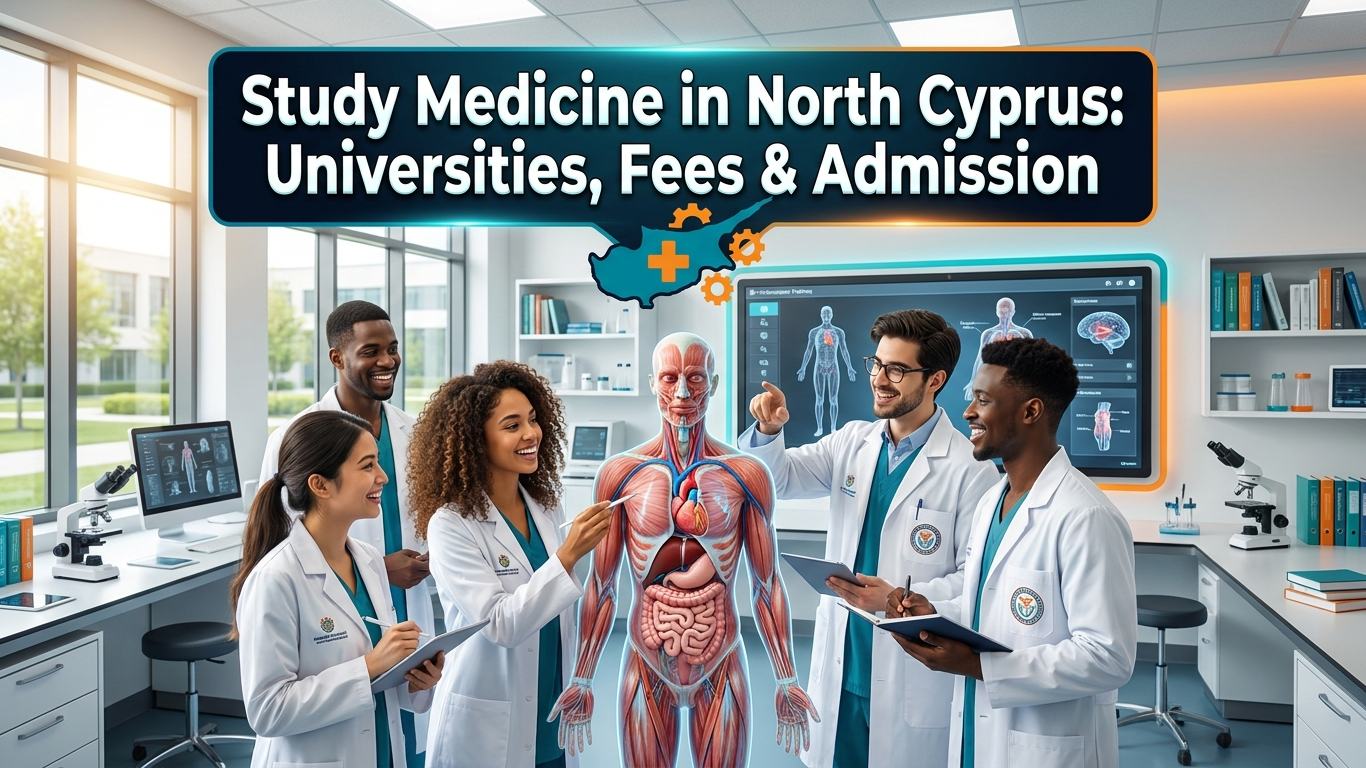
Choosing to study medicine is one of the most significant decisions you will ever make. It's a path of dedication, hard work, and immense reward. For many aspiring doctors, the high competition and staggering costs in their home countries can feel like insurmountable barriers. This is where North Cyprus emerges as a beacon of opportunity, offering a high-quality, English-taught medical education at a fraction of the cost you might find in Europe, the UK, or North America.
The island's universities have invested heavily in creating world-class medical faculties, complete with modern laboratories, advanced simulation centers, and their own private teaching hospitals. This commitment ensures that students not only gain theoretical knowledge but also receive extensive, hands-on clinical training. A medical degree from North Cyprus can open doors to a global career, with many programs listed in the World Directory of Medical Schools (WDOMS), a crucial step for international recognition.
Top Universities for Medicine in North Cyprus
Several universities in North Cyprus have distinguished themselves as centers of excellence for medical education. These institutions attract students and faculty from around the globe, creating a diverse and intellectually stimulating environment. When you choose to study medicine here, you're not just enrolling in a program; you're joining a community dedicated to advancing global health.
Leading institutions like Near East University (NEU), Cyprus International University (CIU), and Eastern Mediterranean University (EMU) offer comprehensive Doctor of Medicine (MD) programs. They boast state-of-the-art facilities, including fully-equipped teaching hospitals where students begin their clinical rotations early in their studies. The curriculum is often designed in line with American or European standards, ensuring a modern and relevant medical education.
University List of North Cyprus
All UniversitiesAdmission Requirements and The Application Process
Gaining admission to a medical program in North Cyprus is competitive, but the process is straightforward. Generally, universities look for applicants with a strong academic background, particularly in the sciences. The key requirements typically include:
- A high school diploma (or equivalent) with high marks in Biology, Chemistry, and Physics or Mathematics.
- Proof of English language proficiency, such as TOEFL or IELTS scores, though some universities may offer their own proficiency tests upon arrival.
- Some universities might also require an entrance exam or a formal interview to assess a candidate's suitability for the demanding field of medicine.
Tuition Fees and Living Costs
One of the most compelling reasons to study medicine in North Cyprus is the affordability. While tuition fees vary between universities, you can generally expect to pay between $12,000 and $20,000 USD per year. This is significantly lower than the fees for comparable programs in countries like the USA, UK, or Australia, without compromising on the quality of education and facilities.
Beyond tuition, the cost of living is also very reasonable. Students can find comfortable and affordable accommodation both on and off campus. Daily expenses for food, transportation, and leisure are much lower than in most Western countries, allowing you to focus on your studies without excessive financial strain.
Academic Program List
All ProgramsCurriculum and Clinical Training
The Doctor of Medicine (MD) program in North Cyprus is typically a six-year course. The curriculum is divided into two main phases:
- Years 1-3 (Pre-Clinical): This phase focuses on the fundamental medical sciences, including Anatomy, Physiology, Biochemistry, and Histology. You'll build the theoretical foundation for your medical career through lectures, seminars, and intensive lab work.
- Years 4-6 (Clinical): This is where your practical training begins. You will undertake clinical rotations in various hospital departments, such as Internal Medicine, Surgery, Pediatrics, and Gynecology, under the supervision of experienced physicians and specialists.
“The hands-on experience in the university hospital was invaluable. We weren't just learning from textbooks; we were interacting with patients and senior doctors from the fourth year onwards.”
— A recent medical graduate from North Cyprus